
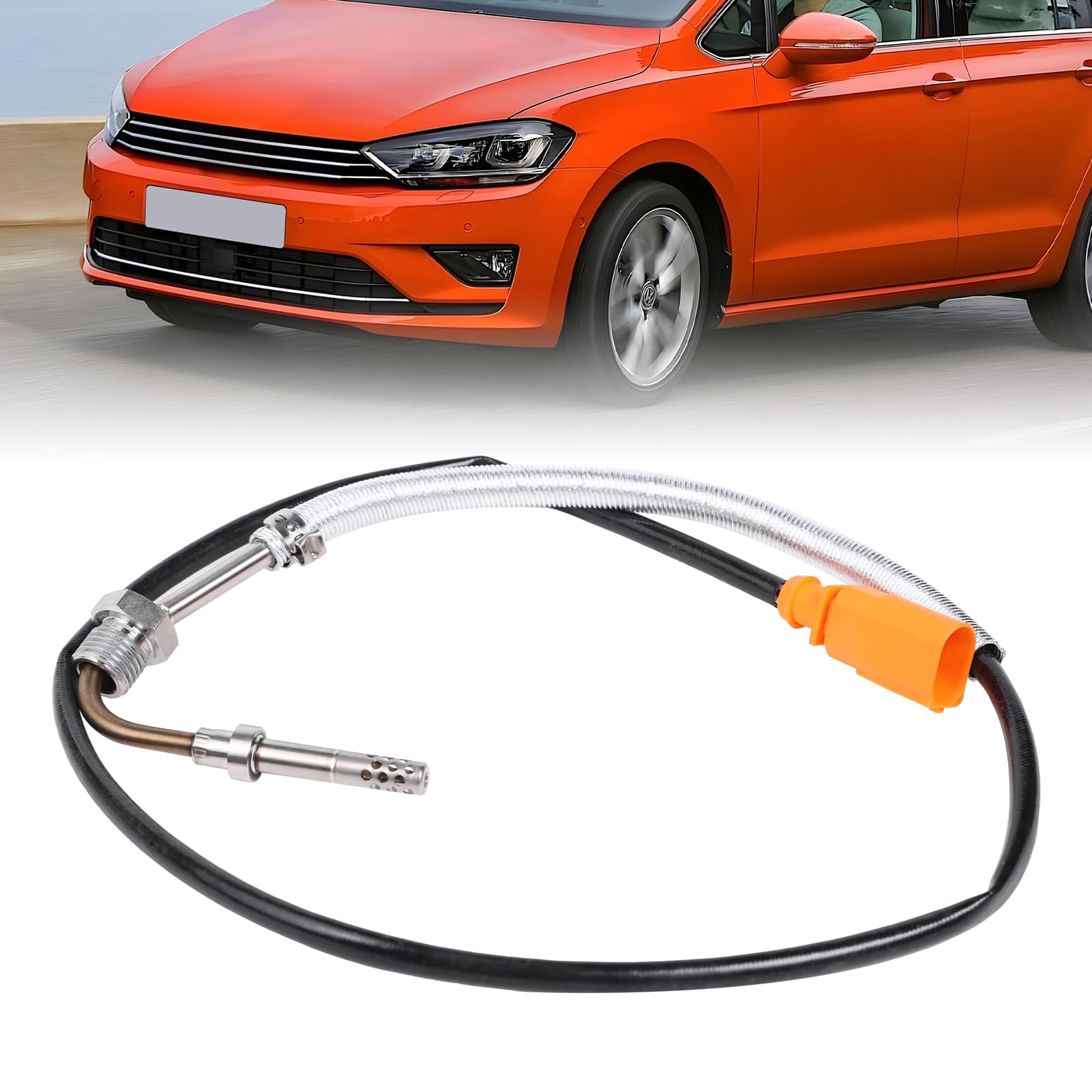
If you’re into automotive maintenance, engine performance, or just curious about how your vehicle’s exhaust system works, you’ve probably come across the exhaust gas temperature (EGT) sensor. This small but critical component is a unsung hero of modern engine management—keeping your engine efficient, reducing emissions, and protecting key parts from damage. But how exactly does it measure the blistering-hot exhaust gases streaming out of your engine? Let’s break down the science, types, and functionality of EGT sensors in simple, easy-to-understand terms.
What Is an EGT Sensor, Anyway?
First, let’s cover the basics. The exhaust gas temperature sensor is a thermometric device designed specifically to measure the temperature of exhaust gases as they exit the engine’s combustion chamber. It’s found in nearly all modern gasoline, diesel, and hybrid vehicles, and it’s directly connected to the engine control unit (ECU)—the “brain” that regulates engine performance.
Unlike other temperature sensors in your car (like the coolant temperature sensor), the EGT sensor operates in an extremely harsh environment: it’s exposed to exhaust gases that can reach temperatures of up to 1,200°C (2,192°F) in high-performance or heavy-duty engines. Its job is to send real-time temperature data to the ECU, which uses this information to make critical adjustments to fuel injection, ignition timing, exhaust gas recirculation (EGR), and aftertreatment systems (like catalytic converters and diesel particulate filters).
The Core Working Principle: Converting Heat to Electrical Signals
At its heart, every EGT sensor works by converting thermal energy (heat) into an electrical signal that the ECU can interpret. The exact method depends on the type of sensor, but there are two main technologies used in modern vehicles: thermocouple-based sensors and thermistor-based sensors. Let’s dive into each one.
1. Thermocouple-Based EGT Sensors (The Most Common Type)
Thermocouple EGT sensors are the industry standard, especially in high-performance, heavy-duty, and diesel engines. They operate on the Seebeck effect—a scientific principle discovered in 1821 that states: when two different metals are joined at two points (called “junctions”), a temperature difference between the junctions generates a small electrical voltage.
Here’s a step-by-step breakdown of how it works:
- Two Dissimilar Metals: The sensor contains two wires made of different metals (common pairs include chromel-alumel or platinum-rhodium). These wires are twisted together at one end to form the “hot junction.”
- Hot vs. Cold Junctions: The hot junction is exposed directly to the exhaust gases (mounted in the exhaust manifold or downpipe), where it absorbs heat. The other end of the wires (the “cold junction”) is mounted in a cooler part of the engine bay, not exposed to exhaust, so it remains at a lower, stable temperature.
- Voltage Generation: As the exhaust gases heat the hot junction, a temperature difference forms between the hot and cold junctions. This difference causes electrons to flow between the two metals, creating a small voltage (measured in millivolts).
- ECU Interpretation: The ECU reads this voltage and uses a preprogrammed chart to convert it into a temperature value. The voltage is directly proportional to the temperature difference—higher exhaust temperatures mean a higher voltage, and vice versa.
The biggest advantage of thermocouple sensors is their ability to handle extremely high temperatures (up to 1,200°C) and their durability in harsh exhaust environments. They’re also fast-responding, making them ideal for monitoring rapid temperature changes during engine operation.
2. Thermistor-Based EGT Sensors
Thermistor-based EGT sensors are less common but still used in some gasoline engines and aftertreatment systems (where exhaust temperatures are lower, typically up to 500°C / 932°F). They use a thermistor—a resistor whose electrical resistance changes with temperature—instead of dissimilar metals.
There are two main types of thermistors used in EGT sensors:
- Negative Temperature Coefficient (NTC) Thermistors: The most common type for EGT sensors. Their resistance decreases as temperature increases—so when exhaust gases get hotter, the thermistor’s resistance drops.
- Positive Temperature Coefficient (PTC) Thermistors: Less common for EGT applications. Their resistance increases as temperature increases.
Here’s how they work in practice: The thermistor is exposed to exhaust gases. As the temperature changes, its resistance changes. The ECU sends a small, constant current through the thermistor and measures the voltage drop across it (using Ohm’s Law: V = I×R). Since current is constant, the voltage drop is directly related to the thermistor’s resistance—and thus, to the exhaust temperature. The ECU converts this voltage into a temperature reading and uses it to adjust engine operations.
Thermistor sensors are more affordable and accurate at lower temperatures, but they can’t handle the extreme heat of high-performance or heavy-duty engines—making them a better fit for milder applications.
Why Does the EGT Sensor Matter?
You might be wondering: why is measuring exhaust temperature so important? The EGT sensor’s data is critical for three key reasons:
- Emission Control: Catalytic converters and diesel particulate filters (DPFs) are sensitive to extreme heat. If exhaust temperatures get too high, these components can melt or become damaged, leading to increased emissions and costly repairs. The ECU uses EGT data to adjust the air-fuel mixture and EGR system to keep temperatures within safe limits.
- Turbocharger Protection: Turbochargers rely on cool exhaust gases to function properly. Excessively high temperatures can warp turbo blades or damage seals. The EGT sensor alerts the ECU to overheating, allowing it to reduce boost pressure or adjust fuel delivery to protect the turbo.
- Engine Efficiency: By monitoring exhaust temperatures, the ECU can optimize fuel injection timing and the air-fuel ratio. This improves fuel economy, reduces engine wear, and ensures the engine runs at its peak performance.
Common EGT Sensor Issues (And What to Look For)
Like any automotive component, EGT sensors can fail over time—usually due to the harsh conditions they operate in. Common issues include:
- Carbon Deposits: Exhaust soot can coat the sensor’s tip, reducing its ability to absorb heat and send accurate readings.
- Thermal Fatigue: Repeated exposure to extreme heat and cold can cause the sensor’s wires (in thermocouples) or thermistor to crack or fail.
- Electrical Faults: Damaged wiring or poor connections can cause the sensor to send incorrect data or no data at all to the ECU.
Signs of a faulty EGT sensor include decreased fuel economy, increased emissions, a check engine light (often with a diagnostic trouble code like P0544 or P0546), and even engine misfires or reduced power.
Final Thoughts
The exhaust gas temperature sensor may be small, but its role in keeping your engine running smoothly, efficiently, and safely cannot be overstated. By converting the extreme heat of exhaust gases into measurable electrical signals, it gives the ECU the information it needs to make critical adjustments—protecting expensive components and reducing environmental impact.
Whether you’re a professional mechanic, a car enthusiast, or just someone who wants to understand their vehicle better, knowing how the EGT sensor works helps you appreciate the engineering that goes into modern engines. Next time you hear about “EGT readings” or notice a check engine light related to exhaust temperature, you’ll know exactly what’s happening under the hood.
—
Note: This post is for informational purposes only. Always consult a certified mechanic or automotive professional for diagnosis and repairs related to your vehicle’s sensors.