
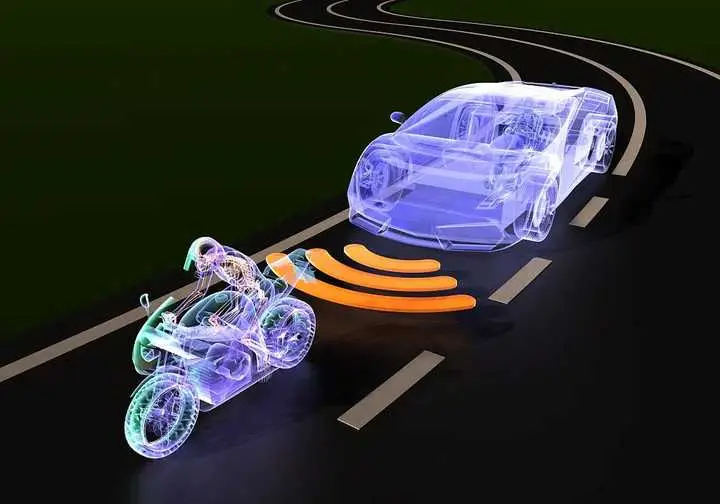
If a car is compared to a complete “living organism”, the engine is the heart, the transmission is the bones and muscles, and the automotive sensors are the “sensory nerves” spread all over the body. They can real-time capture various data during the vehicle’s operation, convert them into electrical signals and transmit them to the Electronic Control Unit (ECU), which then issues instructions to ensure the vehicle operates safely, efficiently and stably. From engine start-up to braking, from steering assistance to air conditioning adjustment, every link is inseparable from the precise cooperation of sensors. Among them, emission-related sensors are the core force to protect the environment and ensure the vehicle’s compliant emissions.
I. What is an Automotive Sensor? What is its Core Function?
An automotive sensor is an electronic component that converts non-electrical signals such as physical quantities (e.g., temperature, pressure, speed, position) and chemical quantities (e.g., exhaust gas components) during vehicle operation into identifiable and transmittable electrical signals. Its core functions can be summarized into three links: “perception, transmission, and feedback”:
- Perception: Capture the operating status of various vehicle systems (such as engine water temperature, tire pressure, brake pedal stroke, and exhaust gas components);
- Transmission: Convert the captured signals into electrical signals recognizable by the ECU and quickly transmit them to the control unit;
- Feedback: The ECU adjusts the vehicle’s operating parameters (such as adjusting fuel injection volume, braking force, and exhaust gas treatment intensity) according to the sensor signals to form a closed-loop control, ensuring the vehicle works normally and meets emission standards.
In simple terms, sensors are the “eyes” and “ears” of the ECU. Without them, the vehicle would become “blind and deaf”, unable to cope with complex driving environments, and even prone to malfunctions and out-of-control risks. Emission-related sensors are directly related to whether the vehicle meets environmental protection standards.
II. Main Classifications and Detailed Explanations of Common Types of Automotive Sensors
There are many types of automotive sensors, which can be divided into three categories according to application scenarios: engine system, chassis system, and body system. Each category has its core representative sensors. Among them, emission-related sensors are mainly concentrated in the engine exhaust system, responsible for monitoring exhaust gas components and temperature to ensure the vehicle meets emission standards. Combined with daily driving scenarios, we will explain the most common types, focusing on emission-related sensors:
(I) Engine System Sensors: Ensuring Power, Energy Conservation and Compliant Emissions
The engine is the “heart” of the car. The accuracy of sensors directly affects the engine’s power, fuel consumption and exhaust emissions. Core sensors include conventional power sensors and special emission-related sensors, among which emission-related sensors are the key to environmental protection:
- Crankshaft Position Sensor: The “speed sentinel” of the engine, installed at the front or rear of the crankshaft. It detects the rotation angle and speed of the crankshaft to determine the position of the piston (top dead center, bottom dead center) and tells the ECU when to ignite and inject fuel. If it fails, the engine will not start, or stall and shake after starting.
- Mass Air Flow Sensor (MAF): The “breathing meter” of the engine, installed on the intake pipe. It detects the amount of air entering the engine, and the ECU calculates the required fuel injection volume based on the air volume to ensure the optimal mixing ratio of fuel and air (air-fuel ratio), reducing pollutant emissions caused by incomplete combustion from the source. Its failure will lead to soaring fuel consumption, reduced power, and even excessive exhaust emissions.
- Water Temperature Sensor: Monitors the temperature of the engine coolant. When the water temperature is too high, the ECU will start the fan to cool down to prevent the engine from overheating; when the water temperature is too low, the ECU will increase fuel injection and raise the idle speed to help the engine warm up quickly, indirectly ensuring complete combustion and reducing pollutant emissions during cold start. In daily driving, the reading on the water temperature gauge is displayed by the signal transmitted by it.
- Oxygen Sensor: One of the core members of emission-related sensors, installed on the exhaust pipe (divided into front oxygen sensor and rear oxygen sensor). The front oxygen sensor detects the oxygen content in the exhaust gas and feeds it back to the ECU to adjust the fuel injection volume, ensuring complete combustion and reducing the emission of harmful gases such as carbon monoxide and hydrocarbons; the rear oxygen sensor is used to detect the oxygen content in the exhaust gas after treatment by the three-way catalytic converter to judge the purification effect of the three-way catalytic converter. Its failure will lead to excessive exhaust emissions, increased fuel consumption, and may trigger the engine fault light to turn on.
- Nitrogen Oxide Sensor (NOx Sensor): An emission-related sensor specially used to detect the content of nitrogen oxides (NOx) in exhaust gas. It is mainly used in diesel vehicles and gasoline vehicles meeting the National VI emission standard, installed in the middle and rear of the exhaust pipe. It real-time transmits the concentration signal of nitrogen oxides in the exhaust gas to the ECU, and the ECU adjusts the working state of the exhaust gas treatment system (such as SCR selective catalytic reduction system) according to the signal, injecting reducing agents such as urea to convert nitrogen oxides into harmless nitrogen and water, ensuring the vehicle meets environmental protection standards. If this sensor fails, the vehicle’s exhaust gas will be seriously excessive, the fault light will turn on, and it will not pass the annual inspection.
- Exhaust Temperature Sensor: The “temperature monitor” of emission-related sensors, installed at different positions of the exhaust pipe (such as after the turbocharger, before and after the three-way catalytic converter, and before and after the particulate filter). Its core function is to monitor the exhaust temperature. On the one hand, excessively high exhaust temperature will damage components such as the exhaust pipe and three-way catalytic converter, and the sensor will timely feed back signals to allow the ECU to adjust working parameters to cool down; on the other hand, the three-way catalytic converter and particulate filter (GPF/DPF) need to work at a certain temperature to achieve the best purification effect. The data from the exhaust temperature sensor can help the ECU control the temperature, ensure the normal operation of the exhaust gas treatment system, and indirectly ensure compliant emissions.
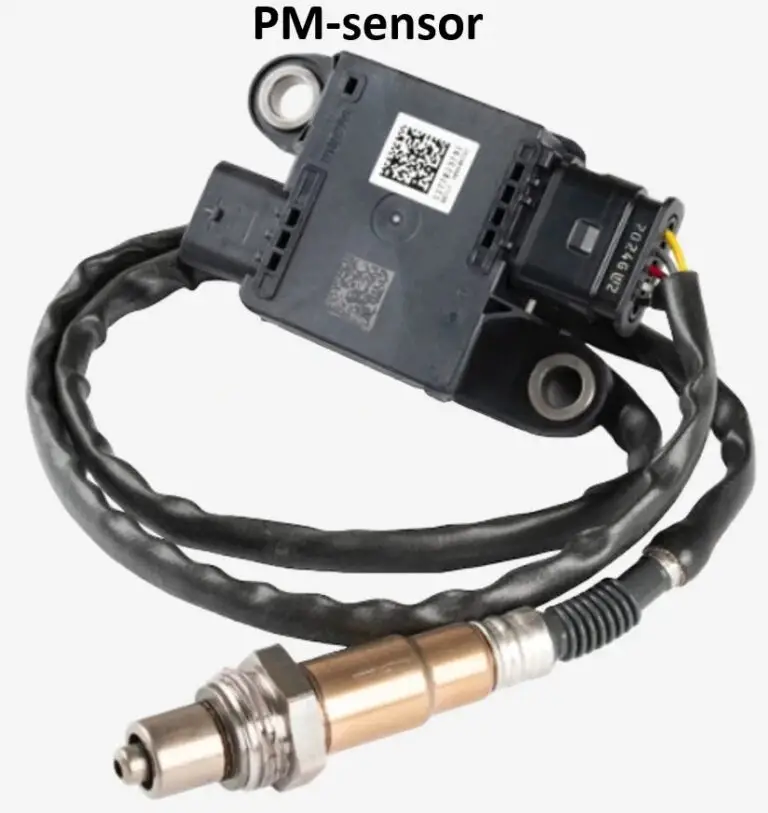
- Particulate Matter (PM) Sensor: Mainly used to monitor the content of particulate matter (PM) in exhaust gas, commonly found in vehicles meeting the National VI emission standard equipped with particulate filters, installed at the outlet of the particulate filter. It can accurately detect the concentration of particulate matter not captured in the exhaust gas. When the particulate matter concentration exceeds the standard, it feeds back to the ECU, which starts the particulate filter regeneration process (burning particulate matter at high temperature) to avoid clogging of the particulate filter and ensure the particulate matter emission in the vehicle’s exhaust gas meets the standard. If the PM sensor fails, the particulate filter cannot regenerate normally, which will lead to reduced vehicle power, increased fuel consumption, and even trigger the fault light to alarm.
(II) Chassis System Sensors: Ensuring Driving Safety and Stability
The chassis system is responsible for the vehicle’s driving, steering and braking, and sensors are directly related to driving safety. Core sensors include:
- Wheel Speed Sensor: The “core sensor” of the Anti-lock Braking System (ABS) and Electronic Stability Program (ESP), installed on the hub of each wheel to detect the wheel speed. When emergency braking occurs, if the speed of a certain wheel drops sharply (risk of locking), the ABS will adjust the braking force according to its signal to prevent wheel locking and vehicle skidding; the ESP judges whether the vehicle is deviating by comparing the speeds of the four wheels and timely adjusts the wheel braking force to maintain vehicle stability.
- Tire Pressure Monitoring System (TPMS) Sensor: One of the most familiar sensors, divided into built-in type (installed inside the tire) and external type (installed at the valve). It real-time detects the tire pressure and temperature. When the tire pressure is too low, too high or the temperature is abnormal, it will alarm through the instrument panel to remind the driver to check in time to avoid the risk of tire blowout——this is also a standard configuration for current family cars.
- Steering Angle Sensor: Installed under the steering wheel, it detects the rotation angle and speed of the steering wheel and feeds them back to the ECU and steering system. For example, the Electric Power Steering (EPS) will adjust the power assist according to its signal (more power assist at low speed, less power assist at high speed); the ESP judges the driver’s steering intention according to the steering angle to avoid the vehicle “wandering”.
(III) Body System Sensors: Improving Driving Comfort and Convenience
This type of sensor mainly serves the in-vehicle environment and driving convenience. Common ones include:
- Air Conditioning Temperature Sensor: Detects the in-vehicle and outdoor temperatures, feeds them back to the air conditioning control system, and automatically adjusts the cooling, heating intensity and air speed of the air conditioning to maintain the set temperature in the vehicle. For example, after getting on the car in summer, the air conditioning will quickly cool down according to the high outdoor temperature.
- Rain Sensor: Installed above the windshield, it detects the intensity of rain and automatically controls the switch and scraping frequency of the windshield wipers——the more rain, the faster the windshield wipers scrape, without manual operation by the driver, improving driving safety on rainy days.
- Collision Sensor: Used in the airbag system, installed at key positions such as the front and sides of the vehicle body. When a vehicle collision occurs, it quickly detects the collision force. If the force reaches the threshold, it immediately sends a signal to the ECU to trigger the airbag to pop out, protecting the occupants.
III. Common Faults and Judgment Methods of Automotive Sensors
Sensors are precision electronic components that may age and be damaged after long-term use. The common fault manifestations and judgment methods are as follows, focusing on the fault characteristics of emission-related sensors:
- Fault Light Alarm: This is the most intuitive signal. If the engine fault light, ABS fault light, tire pressure alarm light, etc., are on, it is likely that the sensor of the corresponding system has a problem. Among them, faults of emission-related sensors (such as oxygen sensor, nitrogen oxide sensor, PM sensor) usually trigger the engine fault light or a special emission fault light, and some vehicles will prompt “excessive emissions”, affecting the vehicle’s annual inspection.
- Abnormal Vehicle Operation: For example, engine jitter, difficulty in starting, and soaring fuel consumption may be caused by faults of the crankshaft position sensor or mass air flow sensor; brake deviation and ABS failure may be caused by faults of the wheel speed sensor; air conditioning failure to cool and abnormal air speed may be caused by faults of the air conditioning temperature sensor. For emission-related sensor faults, in addition to increased fuel consumption, there may also be problems such as abnormal exhaust odor, reduced power (such as clogged particulate filter), and vehicle torque limitation (for some diesel vehicles).
- Professional Detection: If the cause of the fault is not sure, you can go to a repair shop to read the ECU fault code with professional equipment, which can quickly locate the faulty sensor (for example, the fault code “P0130” is usually a fault of the oxygen sensor, and “P20EE” is mostly a fault of the nitrogen oxide sensor).
Note: Sensor faults cannot be ignored. If not repaired for a long time, they may cause damage to related systems (for example, long-term failure to replace the oxygen sensor will damage the three-way catalytic converter; failure of the PM sensor will cause clogging of the particulate filter, resulting in high maintenance costs). At the same time, faults of emission-related sensors will make the vehicle’s exhaust gas excessive, violating environmental protection regulations and may face penalties.
IV. Development Trends of Automotive Sensors
With the development of vehicles towards intelligence, electrification and environmental protection, sensors are also upgrading towards “high precision, multi-function and integration”, among which the upgrading of emission-related sensors is particularly obvious:
- Intelligence: For example, lidar and camera sensors in autonomous driving vehicles can achieve 360° environmental perception, identify pedestrians, vehicles and obstacles, and provide accurate data for autonomous driving; emission-related sensors are upgrading to “intelligent diagnosis”, which can automatically identify their own faults and remind the driver to repair in advance.
- Integration: Integrate multiple sensor functions into one, such as a “multi-in-one sensor” that can detect temperature, pressure and humidity at the same time; some emission-related sensors have also achieved integration, which can detect multiple exhaust gas components at the same time, reducing the number of parts and lowering costs.
- High Precision: For example, the battery temperature sensor and current sensor of new energy vehicles require an accuracy of 0.1℃ and 0.1A to ensure safe and efficient charging of the battery; the accuracy of emission-related sensors is also constantly improving, which can accurately detect trace pollutants and meet stricter environmental protection standards (such as the National VII emission standard).
V. Summary
Although automotive sensors are small in size and widely distributed, they are indispensable core components of modern vehicles. They not only ensure the normal operation of the vehicle, the safety and comfort of driving, but also protect the ecological environment and ensure the vehicle meets environmental protection standards through the precise monitoring of emission-related sensors (such as oxygen, nitrogen oxide, exhaust temperature and PM sensors). Understanding the basic common sense of automotive sensors, especially the role of emission-related sensors, can not only help us better judge vehicle faults and reduce maintenance costs, but also make us more clearly realize the core of “intelligent and environment-friendly vehicles”. In the future, with the continuous progress of automotive technology, sensors will play a more important role in promoting the automotive industry towards a safer, more intelligent and more environmentally friendly direction.




实用,可以购买
OK